The Debate Over Preserving a 19th Century Church in Western Sydney
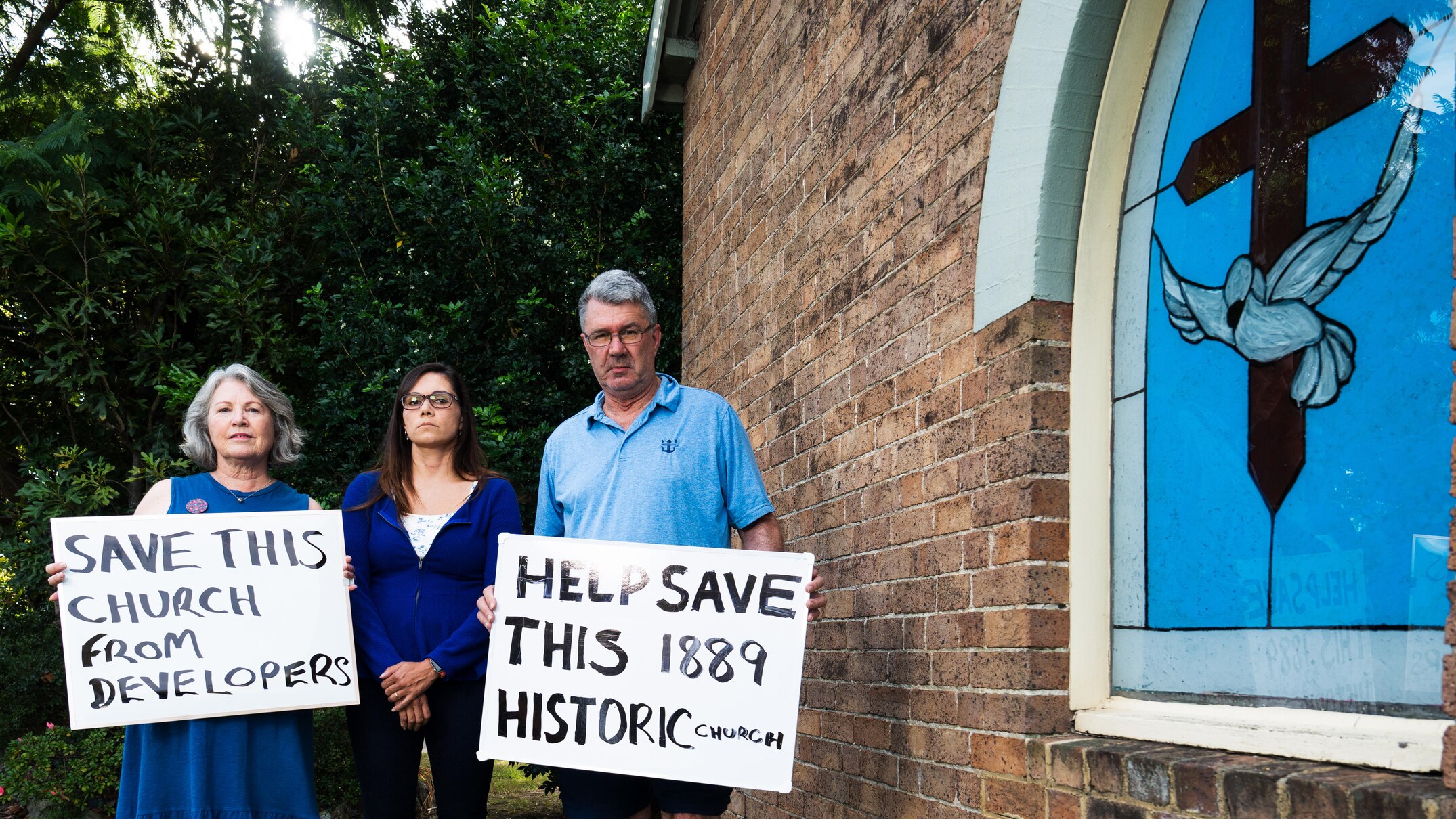
Residents of Jamisontown in Western Sydney are deeply concerned about the potential loss of a 130-year-old church if it is demolished to make way for new housing developments. This concern has sparked a broader conversation about the balance between preserving historical sites and meeting the growing demand for affordable housing in New South Wales.
The former Jamisontown Uniting Church, which once served as a central place for weddings, funerals, and public worship, has been vacant since May last year. Recently, the church was put up for auction, described as a “rare” opportunity for medium density development, including townhouses, villas, or multi-dwelling housing. However, the listing was quietly removed from the market, and a deal was reportedly under negotiation.
For locals like Amanda Davis, the idea of bulldozing the church is heartbreaking. She told the ABC that there is no heritage listing on the site, which means developers could legally demolish it. “There’s plenty of land around the church that they could use instead, if they wanted to build something on it,” she said.
Planning Rules and the Potential for Faith-Based Housing
In New South Wales, faith-based sites such as churches, mosques, and synagogues are typically zoned as SP2 — Place of Public Worship. This zoning makes it difficult for these sites to be developed into housing without going through a lengthy application process at both state and local government levels.
However, recent analysis by UrbanBio for Faith Housing Australia suggests that many faith-owned sites could support well-located housing. The audit found that in the Sydney metro area alone, under-utilised church land could yield more than 20,000 homes if SP2 zoning laws were relaxed.
Amanda Bailey, CEO of Faith Housing Australia, explained that her organization is working with the NSW government to streamline the SP2 planning proposal process. “There is a really strong connection between the mission of local congregations to support their local communities and the current need for housing,” she said.
She also emphasized the importance of preserving the history of these sites while finding ways to provide safe and secure housing. “We’re asking our members to think about the narrative history of that site, why it was originally secured, what it’s been doing over this time, and how they can continue that story into the future — and we think housing is a really important part of that.”
State-Sponsored Housing Initiatives
Minister for Planning and Public Spaces, Paul Scully, noted that the Housing Delivery Authority (HDA) has identified several sites proposed by religious groups as “state significant.” While these sites are typically larger and offer high yields, he encouraged other religious groups to submit expressions of interest to the HDA for consideration.
“The HDA provides an immediate pathway to consider well-developed affordable housing proposals with simultaneous rezonings and development applications that can start within 12 months,” he said.
A Successful Conversion in the Inner West
About 50 kilometres away in the city’s inner west, a similar approach is being tested. Julian Robinson lives in a deconsecrated Anglican church in Dulwich Hill with four other housemates. The 100-year-old building was bought by a group of local investors who wanted to keep the historical site in the community.
Robinson admitted that living in a former church has its challenges, such as limited natural sunlight due to stained-glass windows and sound traveling through high ceilings. However, he believes the benefits far outweigh the drawbacks. “This property being urbanised has changed the lives of five people. It’s given us stability. It’s given us affordable rent,” he said.
The Uncertain Future of the Jamisontown Church
In Jamisontown, Amanda Davis continues to push for a local heritage listing while the sale of the church is under agreement. If developers want to demolish the church, they would need to submit a development application (DA) to Penrith City Council, which would then go to vote after public consultation.
Penrith City Council has commissioned an external heritage study of the building, which will assist in assessing any future development application and guide whether a local heritage listing is appropriate.
Davis hopes the best outcome would be for the church to be preserved and repurposed into affordable housing, similar to the model in Dulwich Hill. “It’s what the church stands for — giving back,” she said.
A spokesperson for the Uniting Church of Synod of NSW and ACT mentioned that the church had considered various future uses, including a community housing partnership, but faced a lack of interest from providers. They also highlighted the costs of refurbishment, including structural issues, accessibility limitations, and asbestos, estimated at around $1 million.
“Proceeds from the sale will support the church’s housing renewal program in Western Sydney, including redevelopment of existing low-density properties into medium-density housing in areas such as Liverpool and Fairfield,” the spokesperson added.
It is understood that the Uniting Church removed the listing following the end of an Expression of Interest campaign and is now negotiating with interested parties.