A New Era for Booderee National Park
As the community came together to mark 30 years since Booderee National Park in Jervis Bay was returned to its traditional owners, a significant announcement was made that will shape the future of this iconic location. The Wreck Bay Aboriginal Community Council (WBACC) has revealed plans to take full control of the park within two years, becoming the first of the three jointly managed Commonwealth parks in Australia to do so.
Booderee National Park, along with Uluru-Kata Tjuta and Kakadu, is one of only three parks in Australia that are owned and managed by Aboriginal communities. These parks operate under joint management agreements, where traditional owners and Parks Australia work side by side to protect and care for the land.
Beverley Ardler, chair of the Joint Board for Booderee, spoke at the 30th Anniversary Celebrations held at Green Patch in Jervis Bay. She confirmed that in May 2028, the park will transition to sole management by the WBACC, marking a major shift in how the land is governed.
“We as Wreck Bay people are going, enough’s enough, we’re not waiting another 60 years, we’re taking it right here, right now,” she said. “In two years, our people will be running and managing this park.”
Ms Ardler, who is also a member of the WBACC, explained that all three jointly managed parks have 99-year lease agreements with the government. These agreements were originally put in place to allow time for communities to prepare for a transition to sole management. However, the Wreck Bay community has built the necessary capacity to manage their land independently.
Parks Australia has acknowledged this transition and is working with the community to develop a pathway towards sole management. George Brown, a park manager and member of the Wreck Bay community, shared his personal connection to the handover of the park in 1995. As a 12-year-old schoolboy, he witnessed the event that changed the course of history for the area.
At the celebrations, Mr Brown paid tribute to the elders and the ongoing efforts of the community. “The return of the land in the 90s, the establishment of joint management and the continued strength of your culture and our culture did not happen easily,” he said. “They happened because you stood firm. You stood in what was right and what was fair.”
He encouraged those present to reflect on the lessons of the past as they move forward with the transition to sole management. “Today’s event has never been about land — it was and continues to be about identity, self-determination and the passing of knowledge from one generation to the next,” he added.
Ricky Archer, director of Parks Australia, expressed his support for the community’s plans. “I just wanted to reiterate Parks Australia’s strong support towards working with the Wreck Bay Aboriginal Community Council to realising what sole management looks like and developing a strong pathway to get there,” he said.
Cultural Celebrations and New Beginnings
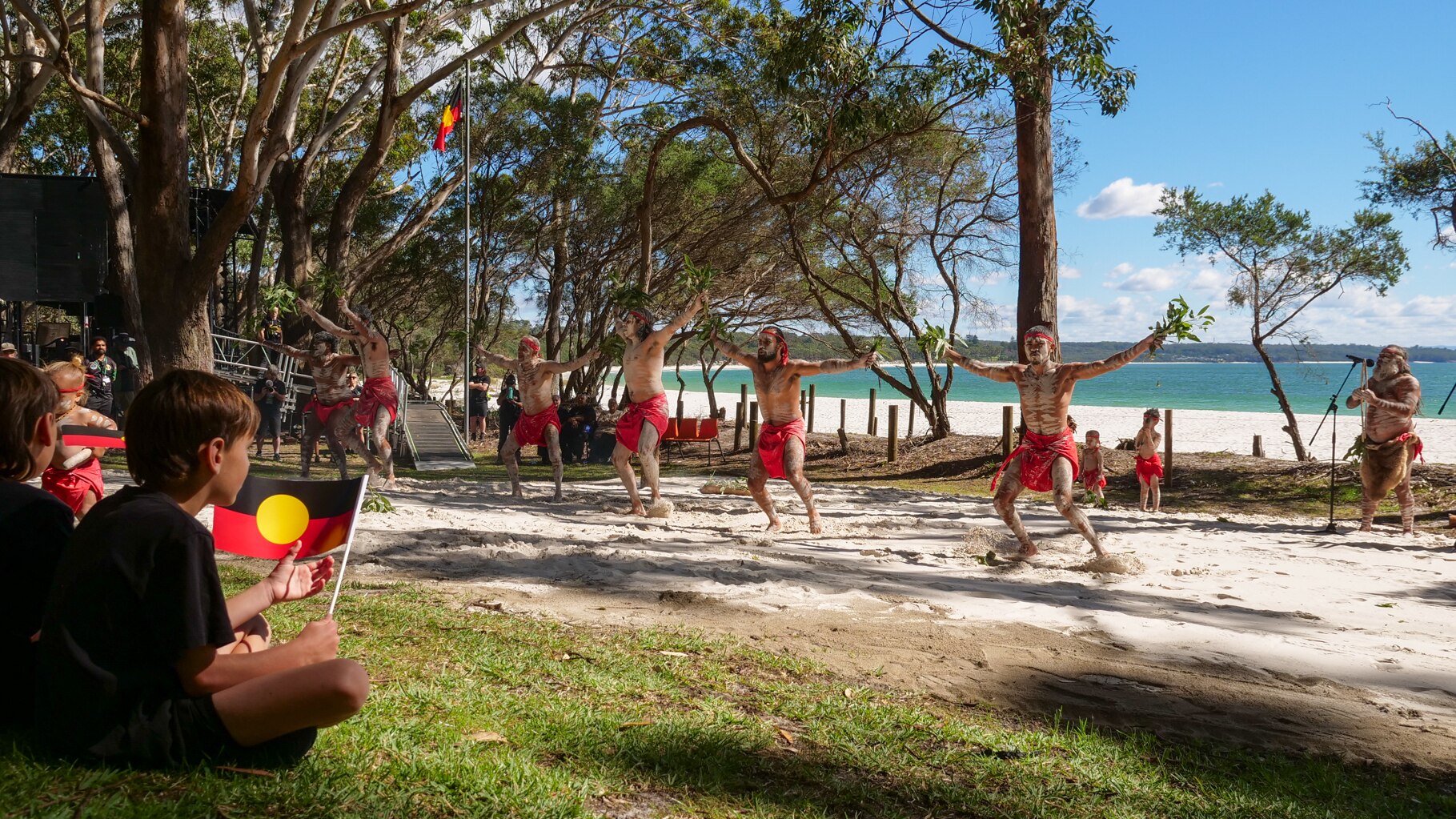
The 30th anniversary celebrations at Green Patch were filled with cultural significance, including a smoking ceremony and performances by the Doonooch Dancers. Choir performances and live music added to the festive atmosphere, highlighting the deep connection between the community and the land.
A new book titled Bugiya, Nhaway, Buraadja, meaning “yesterday, today and tomorrow,” was launched during the event. This collection of oral histories was created to preserve the stories of the Wreck Bay community.
Kain Ardler, cultural heritage officer for the Wreck Bay Aboriginal Community Council, described the book as an important milestone. “What better time than today to launch it on the 30th anniversary of the hand back of country, so the handing back of country are these stories as well,” he said.
The book began as an oral history project initiated by the community. It includes personal stories from elders and children, making it the first ever book written by the community. The council hopes to publish more books in the future.
Paul Collis, who teaches Indigenous Studies at the University of Canberra, was approached by the Wreck Bay community to help with the project three years ago. Dr Collis described the experience as both meaningful and joyful. “There’s been sadness, there’s been loss, there’s been great joy and discovery as well and I think the book is an amazing amalgam of different voices of this community in a very historic moment,” he said.
This celebration marks not only a milestone in the history of Booderee National Park but also a step forward in the journey of self-determination for the Wreck Bay Aboriginal Community. As the park transitions to sole management, the focus remains on preserving culture, protecting country, and strengthening the community.