
Trump’s Iran Stance Sparks Bipartisan Backlash and Calls for Congressional Action
Recent military operations in Iran, spearheaded by the Trump administration, have ignited a firestorm of criticism, with a surprising coalition of lawmakers from both sides of the aisle questioning the President’s unilateral approach and demanding greater congressional oversight. At the forefront of this dissent are a group of conservative Republicans, often labelled “MAGA rebels,” alongside prominent Democrats, who argue that the President’s actions deviate from the “America First” ethos and potentially drag the nation into further foreign entanglements.
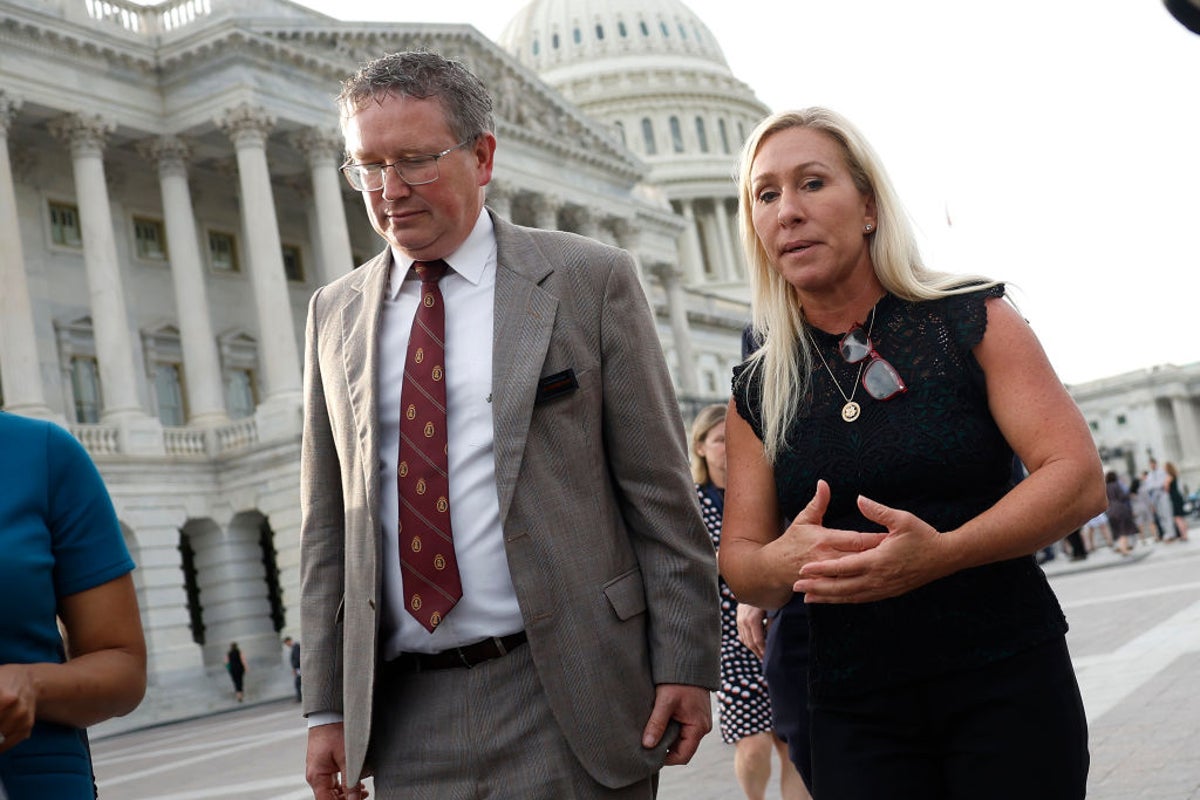
Kentucky Representative Thomas Massie and former Congresswoman Marjorie Taylor Greene have been vocal critics, labelling the policy as “America Last” and advocating for a congressional vote on any further military strikes. Greene, in a detailed social media post, highlighted the perceived hypocrisy between campaign promises of “No More Foreign Wars” and the current military posture.
“We said “No More Foreign Wars, No More Regime Change!” We said it on rally stage after rally stage, speech after speech,” Greene stated. She further questioned the narrative surrounding Iran’s nuclear ambitions, suggesting it has been a long-standing, potentially misleading, justification for military action. “But Iran is on the verge of having nuclear weapons. Yeah sure. We have been spoon fed that line for decades and Trump told us all that his bombing this past summer completely wiped it all out. It’s always a lie and it’s always America Last.”
Representative Massie, who has also gained attention for his role in seeking the release of documents related to the Jeffrey Epstein case, has pledged to work with Democrats to ensure a congressional vote on future conflict in Iran. “I am opposed to this War. This is not “America First’,” he asserted. “When Congress reconvenes, I will work with @RepRoKhanna to force a Congressional vote on war with Iran. The Constitution requires a vote, and your Representative needs to be on record as opposing or supporting this war.” Congress is not expected to resume its sessions until Wednesday.
Greene and Massie were notably the only Republican lawmakers to publicly voice concerns regarding previous Trump administration actions in Iran. Their sentiments have been echoed by leading Democrats, including House Minority Leader Hakeem Jeffries and Senate Minority Leader Chuck Schumer.
Democratic Concerns: The Constitution and Congressional Authority
House Minority Leader Hakeem Jeffries accused President Trump of placing American service members in a “dangerous theater of war.” He emphasised the foundational principle of the U.S. Constitution, which vests the power to declare war solely with Congress, arguing that this branch of government is most accountable to the American people.
“The framers of the United States Constitution gave Congress the sole power to declare war as the branch of government closest to the American people,” Jeffries wrote. While acknowledging Iran’s problematic actions – including human rights violations, nuclear ambitions, support for terrorism, and threats to regional allies like Israel and Jordan – he stressed the necessity of congressional authorisation for preemptive military action, barring truly exigent circumstances. “Iran is a bad actor and must be aggressively confronted for its human rights violations, nuclear ambitions, support of terrorism and the threat it poses to our allies like Israel and Jordan in the region. However, absent exigent circumstances, the Trump administration must seek authorization for the preemptive use of military force that constitutes an act of war.”
Senate Minority Leader Chuck Schumer revealed that he had previously urged Secretary of State Mike Pompeo to provide Congress and the American public with clear objectives regarding operations in Iran. Schumer reiterated the nation’s stance against Iran acquiring nuclear weapons but cautioned against pursuing another costly and protracted war in the Middle East, especially when domestic issues demand attention. “Iran must never be allowed to attain a nuclear weapon but the American people do not want another endless and costly war in the Middle East when there are so many problems at home,” Schumer stated, adding that “President Trump’s fitful cycles of lashing out and risking wider conflict are not a viable strategy.”

The debate also brings into focus the War Powers Act of 1973, which mandates that the President inform Congress within 48 hours of deploying troops and requires withdrawal within 60 days unless Congress formally declares war or grants authorisation for military action. An additional 30-day extension is possible at the White House’s request. However, the current political landscape, with Republicans holding majorities in both the House and Senate, makes such congressional approval less likely. This situation mirrors a previous instance where five Republicans joined Democrats in voting for a War Powers Act resolution to halt military action in Venezuela, only for two of them to reverse their votes after public pressure from President Trump.
A Divided Republican Front and Notable Support
Beyond the vocal opposition, some Republican senators have also expressed reservations. Senator Rand Paul of Kentucky, while wishing for the safety and success of American soldiers, stated his opposition to what he perceives as a presidential war, citing his oath to the Constitution. “As with all war, my first and purest instinct is wish Americans soldiers safety and success in their mission. But my oath of office is to the Constitution, so with studied care, I must oppose another Presidential war,” Paul tweeted.
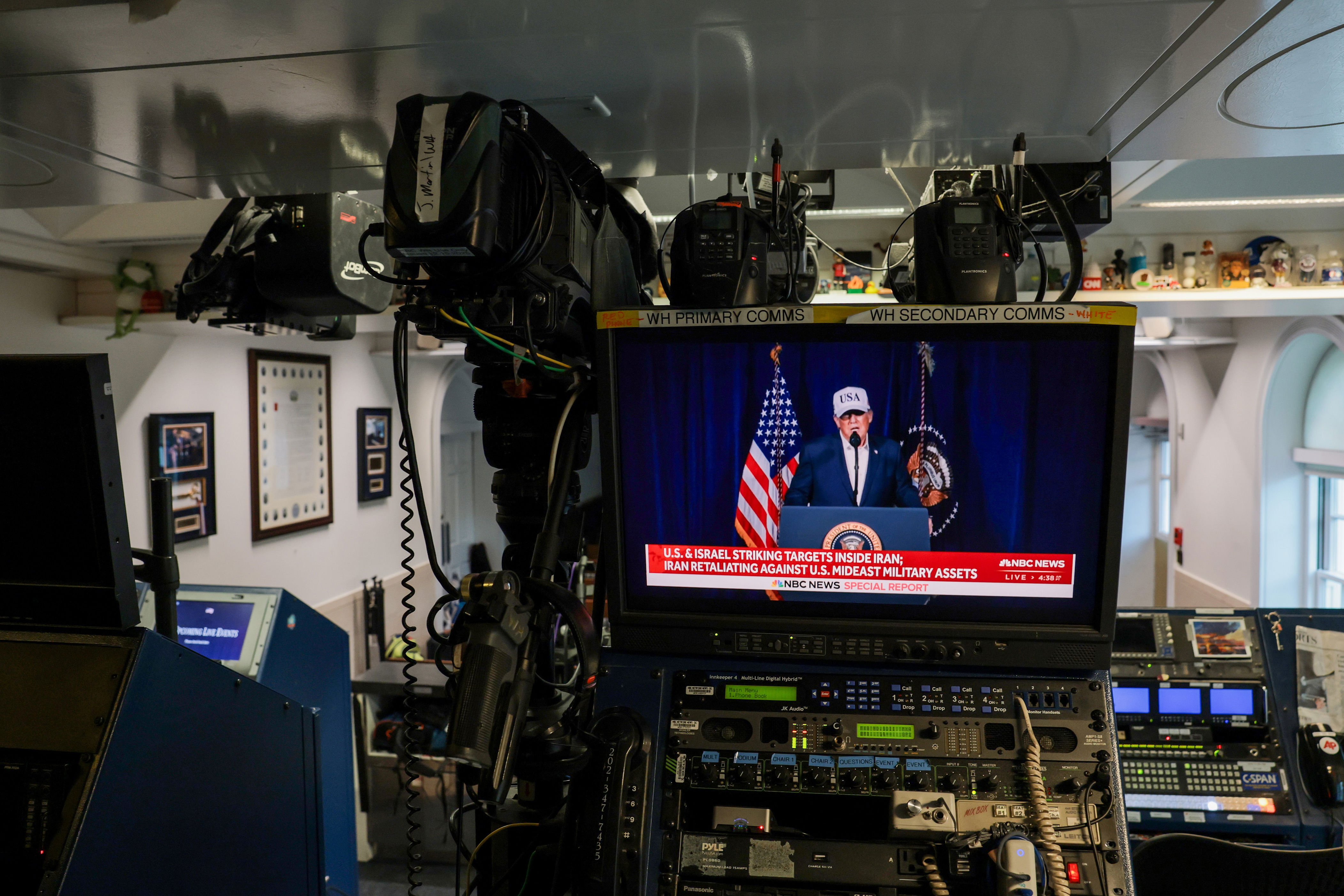
Conversely, staunch allies of President Trump have defended his actions, framing the strikes as a necessary response to Iran’s provocations. House Speaker Mike Johnson asserted that Iran was facing the “severe consequences of its evil actions.” He highlighted the administration’s efforts to pursue diplomatic solutions to Iran’s nuclear ambitions, support for terrorism, and actions that have led to the deaths of Americans and its own citizens. “Today, Iran is facing the severe consequences of its evil actions,” Johnson said. “President Trump and the Administration have made every effort to pursue peaceful and diplomatic solutions in response to the Iranian regime’s sustained nuclear ambitions and development, terrorism, and the murder of Americans—and even their own people.”
Senate Majority Leader John Thune underscored the persistent threat posed by Iran’s nuclear program, ballistic missile capabilities, and support for terrorist groups, which he deemed unacceptable to U.S. service members, citizens in the region, and allies. He commended President Trump for taking decisive action when diplomatic avenues had been exhausted. “For years, Iran’s relentless nuclear ambitions, its expanded ballistic missile inventory, and its unwavering support for terror groups in the region have posed a clear and unacceptable threat to U.S. service members, citizens in the region, and many of our allies. Despite the dogged efforts of the president and his administration, the Iranian regime has refused the diplomatic off-ramps that would peacefully resolve these national security concerns. I commend President Trump for taking action to thwart these threats.”
Even within the Democratic party, there has been a solitary voice of support. Pennsylvania Senator John Fetterman tweeted his approval of “Operation Epic Fury,” commending President Trump for taking necessary steps to foster peace in the region. “Operation Epic Fury. President Trump has been willing to do what’s right and necessary to produce real peace in the region. God bless the United States, our great military, and Israel.” This diverse range of reactions underscores the complex and often contentious nature of foreign policy decisions, particularly when they involve potential military engagement.


