Cape Hillsborough: Where Ancient Culture Meets Modern Conservation
Cape Hillsborough, a jewel in North Queensland’s crown, is renowned globally for its iconic sunrise scenes featuring kangaroos hopping along the beach. However, this picturesque destination, located just a 40-minute drive north of Mackay, offers far more than just a postcard-perfect moment. It is a vibrant national park, a sanctuary to over 850 distinct species of plants and animals, including several endangered and threatened bird and bat populations. This thousand-hectare expanse is a testament to the intricate tapestry of life that thrives within its diverse ecosystems.
For the Traditional Owners, the Yuwi people, this land is deeply sacred. Their Country, stretching from Cape Palmerston in the south to the O’Connell River in the north, encompasses a breathtaking array of environments – from the vast ocean and pristine beaches to the intricate mangrove systems and lush shoreline rainforests that cling to volcanic headlands. These landscapes, adorned with towering hoop pines, eventually give way to more open, drier eucalyptus forests.
Aunty Deb Clark, a respected Yuwi Elder, articulates the profound connection her people have with this land. She views each distinct ecosystem as a separate “country,” each providing unique resources for food, medicine, and materials essential for sustaining their cultural practices and way of life. In return, the Yuwi people have a deep-seated responsibility to care for the land that nourishes them. “We can still feel the spirits of our old people here,” Aunty Deb shares, her voice resonating with a profound sense of belonging. “We are intertwined; we are not two separate entities.” This statement encapsulates the holistic worldview that sees humanity and nature as inextricably linked.
Reawakening Ancient Practices: The Cultural Healing Burn
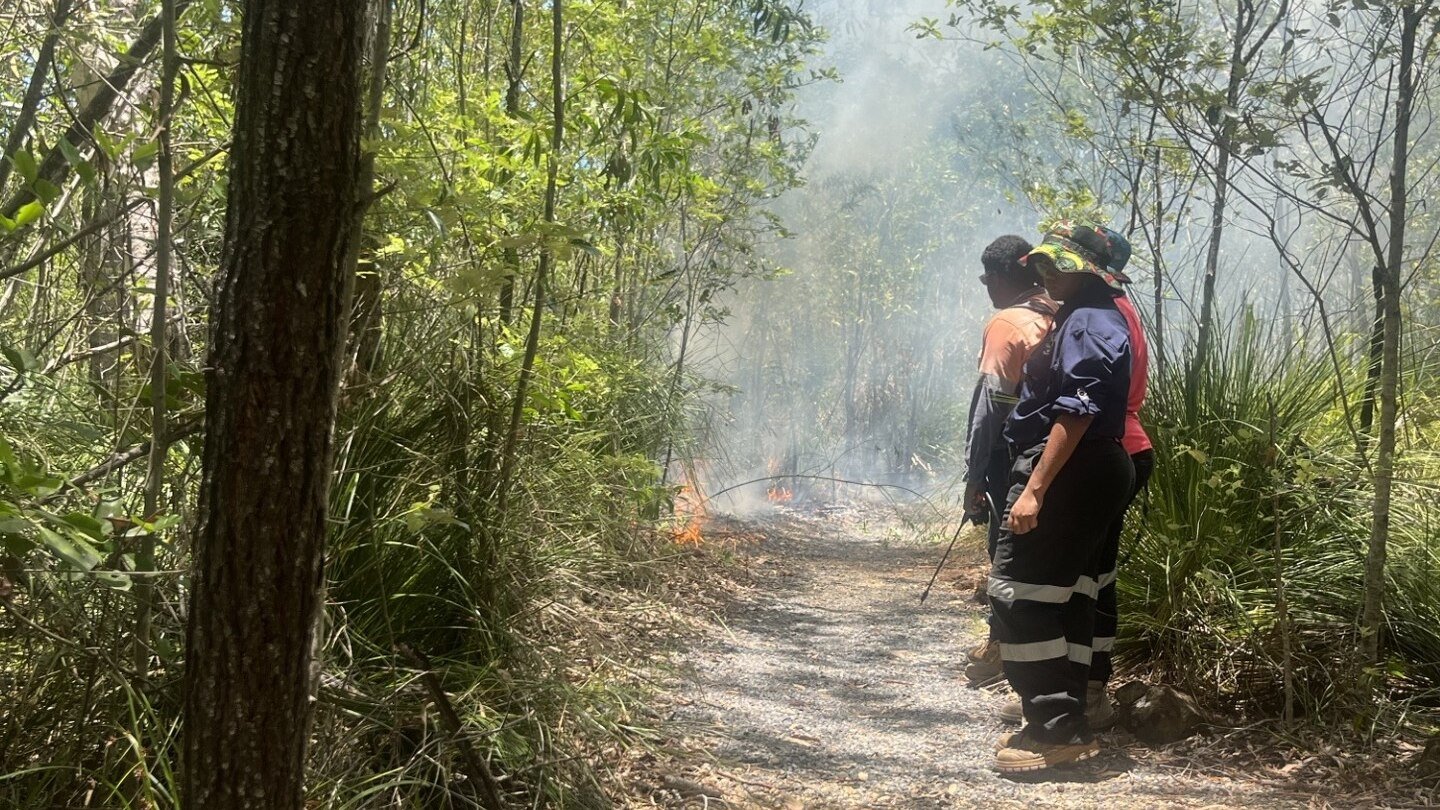
A significant milestone was recently achieved by the Yuwi people in February, with the successful execution of the first Cultural Healing Burn on their Country in living memory. This momentous event saw approximately 40 participants, spanning an impressive age range from eight weeks to 81 years, come together to participate in this ancient practice.
These low-intensity fires are not about destruction, but about regeneration. They play a crucial role in promoting healthy plant growth by carefully clearing away dense undergrowth and invasive species. This process not only helps to prevent devastating wildfires but also creates vital pathways for animals to move freely and allows native plants to flourish.
Aunty Deb explained the meticulous nature of the burn. Elders initiated the fire in small, controlled sections, allowing it to “trickle” its way across the designated two-hectare area. She highlighted the signs of an unhealthy landscape, describing it as being “upside down” – characterised by thick scrub and sparse trees, a stark contrast to the desired state of dense canopies and open forest floors.
The timing of these burns is paramount, with cues taken directly from the land itself. Factors such as soil moisture levels, the blooming of specific flowers, and their locations all signal the opportune moment to commence. “It’s really important that you use all your senses to read Country … and Country will talk to you,” Aunty Deb wisely advises. The emotional impact of witnessing this revitalisation was palpable. “It was emotional … seeing our young rangers smile, seeing them stand that bit taller, seeing them having a better understanding … and an understanding that they are going to be the knowledge holders that are going to be carrying this forward,” she reflected. “We saw our Country breathe … It was healing for the people as well.”
Healing the Land, Healing the People: A Legacy of Resilience
The significance of this land extends beyond its natural beauty and ecological importance. Within a mere 25-minute drive of Cape Hillsborough lie two massacre sites, grim reminders of a tragic past where, according to the University of Newcastle, a total of 150 Indigenous people lost their lives.
Aunty Deb spoke of the profound disruption caused by white settlement, which saw Aboriginal people forcibly removed from their ancestral lands, including Cape Hillsborough. Their traditional practices of land care were suppressed, leading to a loss of vital cultural knowledge. The process of regathering this knowledge has been a long and arduous journey, pieced together through oral histories passed down through generations, recorded historical accounts, the wisdom of neighbouring clans, and invaluable support from organisations like the Firestick Alliance. This Indigenous organisation empowers communities by strengthening their capacity to apply traditional knowledge in caring for their Country. “A lot of [cultural knowledge] has been sleeping until we’ve been able to regain our cultural practice ways,” Aunty Deb stated.
Madeline Jones, Project Manager at the Yuwi Aboriginal Corporation, underscored the transformative impact of the Native Title determination in 2020. This legal recognition paved the way for the co-design and implementation of cultural practices on their Country. “Native Title isn’t just a legal process; it’s emotional, exhausting and deeply personal for families,” Ms Jones explained. The years of struggle, requiring elders and families to repeatedly prove their intrinsic connection to their land, were emotionally taxing. “It gives an opportunity to sit at the table, to be a part of the decision-making process … being native title holders, that allowed us to co-design and co-facilitate our own burn on our own country, our way.”
A Collaborative Future: Bridging Knowledge Systems
The Queensland Parks and Wildlife Service (QPWS) has embraced this partnership with the Yuwi people, recognising the immense value of shared knowledge. Ranger Daniel Burndred expressed his enthusiasm for the collaboration. “We’re seeing really good outcomes here … all the indicator species for a good burn are there,” he commented. “Working with these guys gives us more purpose. We’re learning what’s important to Yuwi when we do those burns … keeping that spiritual connection going and learning from that — it’s golden.”
Aunty Deb emphasised the reciprocal nature of this relationship. “We can learn from Western ways, and they can learn from cultural ways,” she said. “If we do that journey together, listening to each other, then we’ve got the commonality that what we both want is what’s best for the Country here.” This collaborative approach, grounded in mutual respect and a shared vision for the land’s well-being, signifies a promising new chapter for Cape Hillsborough and its surrounding landscapes. As Aunty Deb optimistically concludes, “This is just the beginning.”