Oil Price Surge and Market Turmoil: A Global Economic Outlook
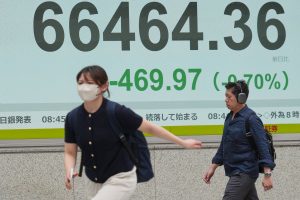
Last week, a sense of calm seemed to be settling over the Australian Securities Exchange (ASX) regarding the geopolitical tensions involving Iran. However, that brief period of perceived stability has been shattered, replaced by widespread market declines and significant concerns over global inflation. The ASX200 experienced a sharp drop of over 3% at the start of the trading week, reflecting a renewed wave of uncertainty that has gripped international markets.
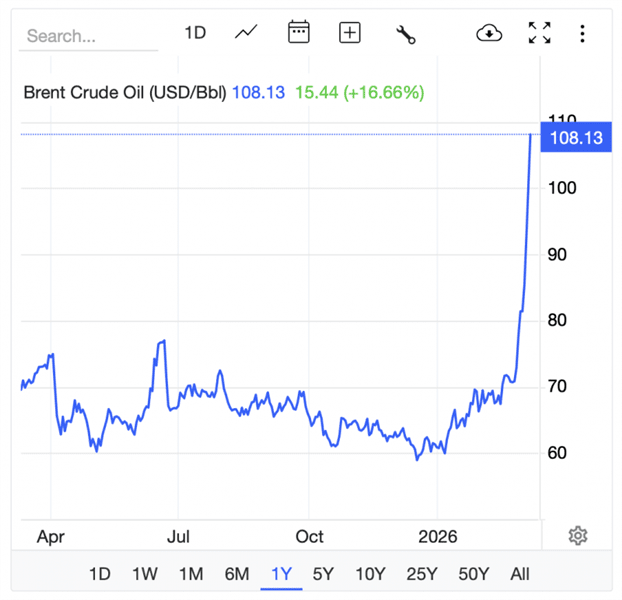
The shift in sentiment appears to be directly linked to escalating actions over the weekend, particularly concerning Israel and Iran. The most striking development is the dramatic surge in crude oil prices, with Brent Crude now surpassing the US$100 per barrel mark. This price point signals a potentially prolonged conflict and a significant inflationary impact that could reverberate across economies worldwide. While recent US jobs data has been a point of discussion, the immediate market driver is undeniably the “wartime market” scenario, overshadowing any sober digestion of economic indicators.
The volatility is further underscored by the CBOE’s VIX index, often referred to as the “fear index,” which has seen a substantial increase of 70% over the past month. This indicates a heightened level of investor anxiety and a significant increase in market uncertainty.
Escalating Tensions and Their Impact on Oil Supply
New Israeli strikes targeting Iranian oil infrastructure appear to be a primary factor driving oil prices to these elevated levels. These actions have confirmed, and in some cases surpassed, the more pessimistic forecasts from analysts. Beyond these direct attacks on Iranian oil assets, which reports suggest have caused friction with the United States, several other critical developments are contributing to the supply crunch:
- Strait of Hormuz Disruption: Traffic through the vital Strait of Hormuz has reportedly come to a standstill. Ships daring to traverse the waterway are now reportedly identifying themselves as Chinese, highlighting the perceived dangers.
- Iraqi Oil Capacity Offline: Iraq has confirmed that approximately 3 million barrels per day (MMbblpd) of its oil production capacity is currently offline, further constricting global supply.
- Qatar’s Dire Oil Price Predictions: Qatar is anticipating oil prices to reach as high as US$150 per barrel, a projection that aligns with even more severe expectations previously outlined by Westpac IQ analysts.
Adding to the grim picture, Iran has reportedly been targeting water desalination plants in other countries. In the Middle East, where water scarcity is a critical issue, such attacks can be viewed as a direct assault on the fundamental capacity for life and survival, escalating the humanitarian and economic implications of the conflict.
Market Reactions and Investor Strategies
The current global economic landscape presents a stark dichotomy for investors:
- Energy Sector Boom: It is an opportune time to be an investor in the energy sector, with significant potential for gains.
- Bullish Oil Derivatives Traders: Those trading in oil derivatives with a bullish outlook are likely experiencing substantial profits.
- Broader Market Downturn: Conversely, for most other market participants, it is a challenging period marked by significant losses.
The prevailing market sentiment suggests that while some traders will undoubtedly engage in “dip-buying” and attempt to “catch falling knives,” the most prudent strategy for some may involve withdrawing capital and placing it into secure term deposits. When the trajectory of oil prices resembles the current charts, the implications for the average citizen are rarely positive. The ripple effects of such a surge in energy costs can lead to increased prices for transportation, goods, and services, impacting household budgets and overall economic stability.
The current market conditions, driven by geopolitical instability and its direct impact on essential commodities like oil, underscore the inherent volatility of global financial markets. Investors and consumers alike will be closely watching developments to gauge the duration and severity of this economic shockwave.
Disclaimer: The information provided in this article is for general informational purposes only and does not constitute investment advice. Readers are strongly encouraged to conduct their own thorough research and consult with a qualified financial advisor before making any investment decisions.