
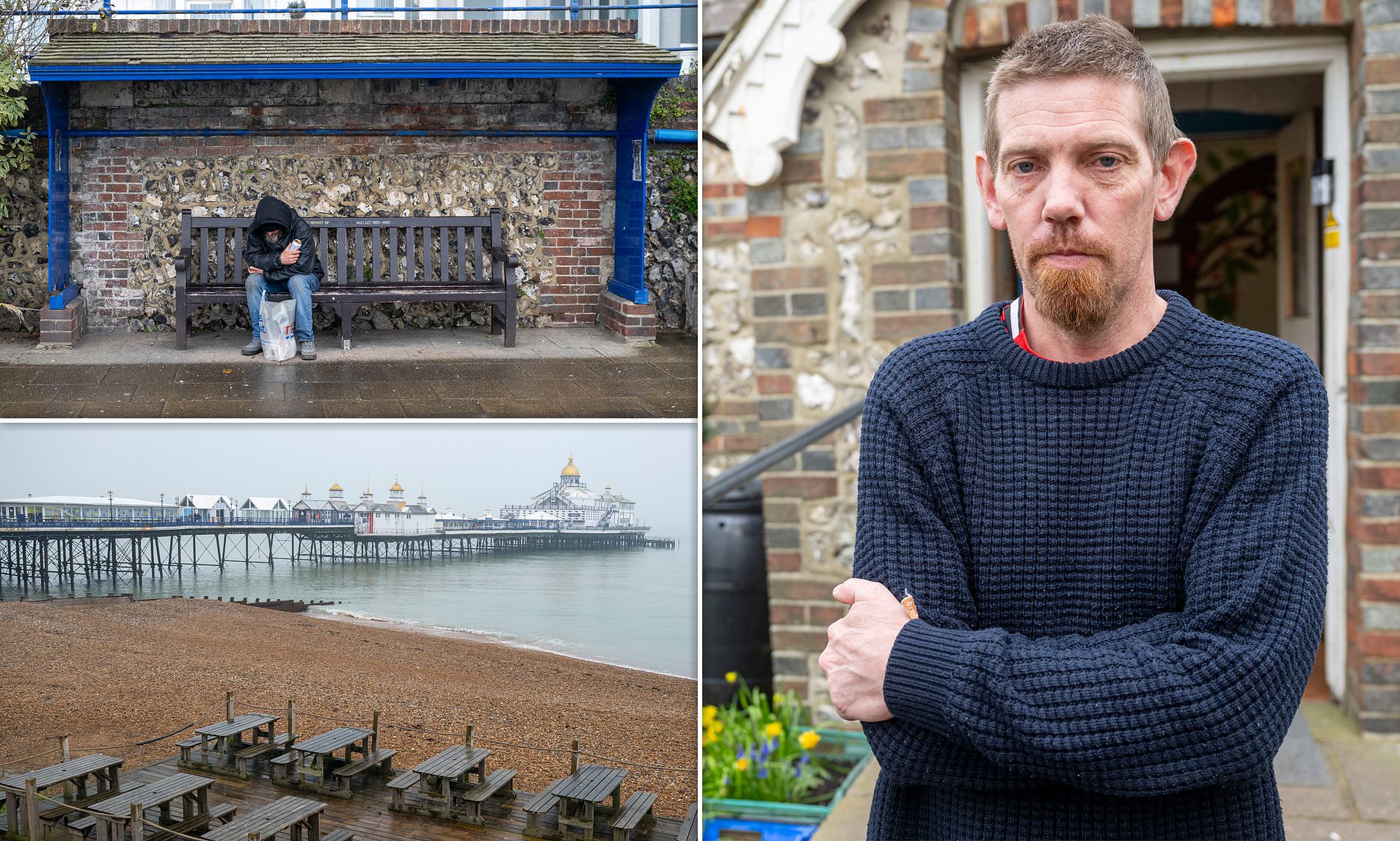
Brighton, a city celebrated for its vibrant arts scene, Regency architecture, and bustling seafront, has long been a magnet for tourists and a desirable place to call home. Its reputation as a tolerant and liberal hub has attracted many seeking a fresh start. However, this image of an ‘oasis of niceness’ is being challenged by a controversial policy impacting the city’s homeless population.
Transplanted Lives: A Growing Concern
Homeless individuals in Brighton are voicing strong accusations against the local council, alleging a deliberate effort to remove them from the city and relocate them to neighbouring Eastbourne. Over the past two years, dozens of people have been moved from the city they know, finding themselves displaced approximately 30 kilometres down the coast.
Dan Hylands, 34, who has experienced homelessness for several years, recounted his own experience of being moved from his hometown. “They literally just booked me a taxi and shipped me all the way over here,” he stated. “They just dumped me here.” Hylands, who has Asperger’s Syndrome, had previously been housed in hostels within Brighton. However, he was moved to an out-of-borough placement last July.
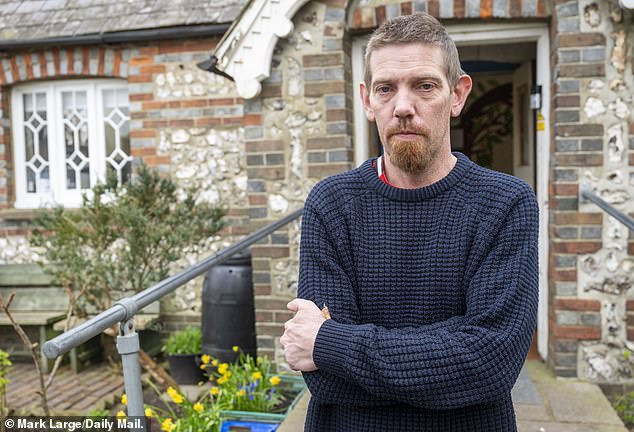
He described his past experiences in Brighton hostels as difficult, citing them as unsafe environments often populated by individuals struggling with addiction. “Every time I was there two days would be the maximum and then I would end up back on the street. It felt safer than being in those places,” he admitted. The disruption caused by his relocation also impacted his ability to continue receiving disability treatment in Brighton, a crucial aspect of his well-being. He now resides in shared accommodation in Eastbourne, rented by Brighton and Hove City Council from a private landlord. “I had a social worker for [my] adult disabilities. I had loads of support in Brighton, but because they’ve moved me over here, the caseworkers are not the same,” he explained.
The Cycle of Displacement
The story of Dan Hylands is echoed by others. Nick Carpenter, 45, a father of three, found himself homeless last October after a long-term relationship ended. “I ended up on the streets,” he said. “It was not a good time. I couldn’t find anywhere to live.” Carpenter was moved from his hometown of Lewes to Eastbourne as part of an ‘out-of-borough placement,’ a move that has further exacerbated his fragile mental health. “I’m out of my comfort zone in Eastbourne. I don’t have any of my friends or family or support network here. It’s difficult trying to start again in a strange place,” he shared.
Carpenter suggests that councils in more affluent areas like Brighton are reluctant to meet the high rental costs demanded by landlords to house homeless individuals. He described the practice as “cynical,” believing that people are being moved to areas with cheaper rents to save money. “It’s people’s lives they’re affecting here. I live to see my three girls but it’s difficult getting to see them now,” he added, highlighting the personal toll of these decisions.
A System Under Strain
Under UK law, all councils are obligated to provide emergency housing for homeless individuals. However, a common practice involves housing them in other parts of the country and compensating those councils for the accommodation.
Alex Haward, who works at Matthew 25, a Christian charity offering food and shelter, has observed a significant increase in people from Brighton seeking their services. The charity provides essential support, including outreach mental health services with a specialist nurse, housing and legal advice, and a safe space for people to get food and socialise.
Haward estimates that between 70 and 80 new individuals from Brighton have relied on their services since the end of 2024. “We’re not being overwhelmed just yet but it’s got a lot busier in the last couple of years,” he noted. He strongly disagrees with the council’s policy, stating, “Councils are picking up very vulnerable people and removing them from their family, friends and support networks and then dumping them in Eastbourne.” He expressed concern for individuals with complex mental health issues who are being destabilised by the very system meant to assist them. “It doesn’t make sense. They have an ‘out of sight, out of mind’ approach to the problem,” he observed. Haward attributes much of this policy to cost-saving measures, with lower rents in places like Eastbourne making it a more financially attractive option for councils.
He further highlighted the lack of adequate support for individuals with complex needs in their new locations, often leaving them in a state of limbo. Haward recounted the distressing case of a wheelchair-bound man with a stoma who was sent to Great Yarmouth, despite having a family support network there, yet the council refused to provide assistance. “It’s shocking,” he stated. The lack of information provided to individuals being transferred also poses a significant challenge for charities like Matthew 25.
The Stark Reality: Statistics and Tragedies
Analysis by the charity Shelter in 2024 revealed that approximately one in 77 residents in Brighton is homeless, a significantly higher rate than the national average of one in 160 across England and one in 47 in London.
The figures illustrate a dramatic increase in out-of-borough placements. In 2023, Brighton and Hove City Council sent 42 people to be housed in Eastbourne. However, by January of the following year, this number had quadrupled to 171, according to data from Eastbourne Borough Council. This surge in placements has led to significant friction between the two local authorities. Eastbourne has accused Brighton of implementing a policy with a “significantly negative impact” on their town.
Tensions reached a critical point last year when two homeless men from Brighton died while residing in emergency accommodation in Eastbourne. While a coroner later ruled out the accommodation as a contributing factor in both cases, Eastbourne Council, run by the Liberal Democrats, had accused Brighton of “directly influencing” their deaths. Eastbourne is now demanding an immediate cessation of the policy and urging Brighton to address its own homelessness crisis.
Calls for Change and Political Intervention
Councillor Peter Diplock, cabinet member for Housing and Homelessness in Eastbourne, stated, “We are calling for urgent action to bring this situation under control. This council prioritises supporting residents in need, but we cannot continue to act as a pressure valve for neighbouring authorities who have not found sustainable solutions to their own housing shortages. It places vulnerable people at risk, and this situation must change.”
Josh Babarinde, the Liberal Democrat MP for Eastbourne, echoed these sentiments. “Out of borough placements should never be made for financial reasons because it betrays those people being placed,” he argued. “It leaves already vulnerable people further at risk and it puts undue pressure on local authorities and charities who pick up the pieces.” Babarinde believes that such placements should only occur under strict criteria, such as when an individual is fleeing domestic abuse, and that their support packages must follow them. He is actively engaging with the Government to introduce financial disincentives for such “unnecessary out-of-boundary placements.”
“No one should be treated in that way. Brighton has been repeatedly challenged about this but have failed to address it,” Babarinde added. “For them, it seems jettisoning people out of the area means the problem is out of sight and out of mind.”
Eastbourne Residents’ Concerns
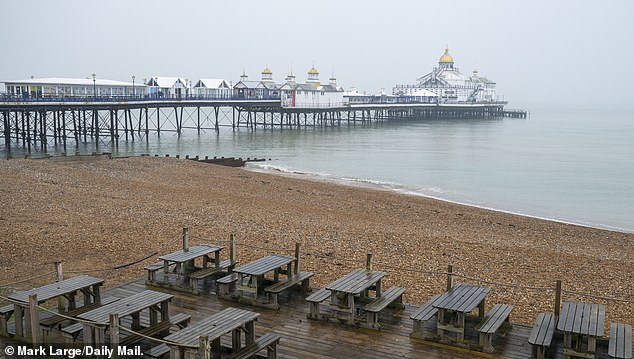
Eastbourne, traditionally a haven for retirees, has seen a noticeable increase in its homeless population since the Covid-19 pandemic. Tent encampments have become a common sight near the train station and along the seafront, leading to growing unease among residents.
Albert and Gillian Andrews, who moved to Eastbourne nine years ago, have observed the transformation. “It’s not the same,” said Mrs Andrews, 73. “There are far more of them, camping out in the parks, near the train station and on the beach. It’s not fair on them but also not fair on residents.” Mr Andrews, 77, added, “You see the tents springing up all over the place. It’s very noticeable. Obviously its cheaper for Brighton to dump its homeless people here where the rents are cheaper but it isn’t fair. It’s just a shame our council can’t stand up to them and tell them to stop.”
Philippa Nelson and Debbie Howarth believe the escalating homelessness problem is detrimental to Eastbourne’s tourist economy and is altering the character of the resort. “It’s very visible these days,” said Mrs Nelson. “Given these people are already very vulnerable it doesn’t make sense to further destabilise them by taking them away from friends and family.” Mrs Howarth, a lifelong Eastbourne resident, stated, “I think it should stop. Simply dumping people here because it’s cheaper is wrong.”
Councillor Diplock reiterated Eastbourne’s long-standing campaign for neighbouring authorities to house individuals within their own city boundaries, unless there are safeguarding issues. He stressed that this approach keeps people closer to their support networks and authorities. “We have also spoken out against the scale of out of area placements into Eastbourne – particularly by Brighton & Hove City Council,” he said. “This is completely unsustainable and is placing a disproportionate burden on Eastbourne’s services, charities and voluntary organisations.” He expressed continued frustration that Brighton & Hove City Council relies so heavily on Eastbourne for accommodation, increasing risks for those placed there.
Brighton’s Defence and the Ongoing Challenge
Brighton, which faces some of the highest rates of homelessness in the UK, has previously defended its actions, labelling claims of failing to resolve its homelessness issue as “wildly inaccurate” and “extremely unfair.” The council states that the number of people placed in Eastbourne has decreased from a peak of 198 in September 2025, with current figures showing 402 households in temporary out-of-area accommodation.
Councillor Gill Williams, cabinet member for housing at Brighton & Hove City Council, explained, “We have some of the south east’s best figures for prevention of homelessness, but the demand for emergency and temporary accommodation far exceeds the amount available to us in the city. This means sometimes we have no choice but to use out-of-city emergency placements.” She emphasised that the council prioritises keeping people within Brighton & Hove and aims to return them to the city as soon as possible.
“We’re working hard to increase available housing in our city and to expand temporary accommodation provision locally and are seeing this commitment reflected in a recent reduction in the number of households placed by us in Eastbourne,” Councillor Williams stated. She added that Brighton & Hove, like many UK councils, is facing an “unprecedented scale of need.”
“The ongoing claims being made against our council are wildly inaccurate, extremely unfair and undermine the work our partners and housing teams do to support people in a housing crisis,” she concluded. “It is also incredibly disappointing to see elected politicians use dehumanising language when discussing people’s lives and experiences. It does nothing to help address the complex issues we’re facing.”


